
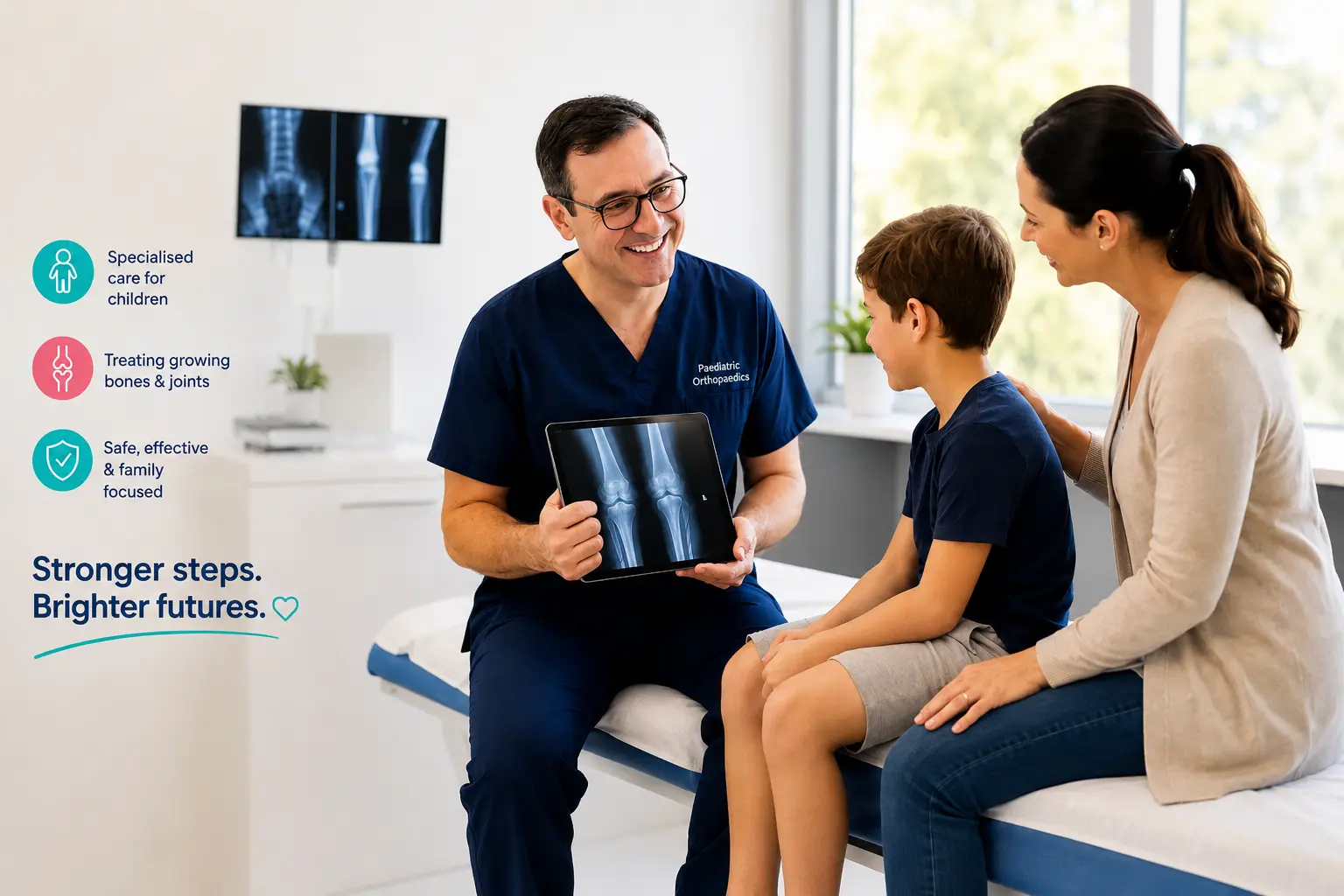

Your child has been limping for two weeks and the GP can't find an obvious cause. The school nurse spotted an unusual curve in your daughter's spine during a posture check. Your teenage son's knee hasn't recovered from a football injury the way it should have. All three paths lead to the same unfamiliar specialist: a paediatric orthopaedic surgeon.
If you've never encountered this subspecialty before, the title alone can feel intimidating. Understanding who this specialist is, what they're trained to do, and why they differ from a general orthopaedic surgeon makes the whole process far less overwhelming.
For caregivers in Western Australia, Best Orthopaedic Surgeons (BOS) provides a practical way to find verified orthopaedic surgeons by subspecialty, including paediatric orthopaedics.
How a Paediatric Orthopaedic Surgeon Differs from an Adult Specialist
One of the most common misconceptions is that any orthopaedic surgeon can treat children. While general orthopaedic surgeons receive broad musculoskeletal training, paediatric orthopaedic surgeons complete additional fellowship training specifically focused on infants, children, and adolescents.
The Extra Training That Makes the Difference
Following orthopaedic residency, paediatric orthopaedic surgeons undertake one to two years of additional fellowship training dedicated to childhood musculoskeletal conditions.
This specialised training includes:
- Congenital deformities
- Growth plate injuries
- Paediatric fractures
- Scoliosis management
- Hip disorders
- Neuromuscular conditions
- Sports injuries in children and adolescents
- Paediatric trauma care
In Australia, parents should look for surgeons who hold FRACS (Fellowship of the Royal Australasian College of Surgeons), FAOrthA (Fellow of the Australian Orthopaedic Association), and additional paediatric orthopaedic fellowship training.
Why Growing Bones Require a Different Clinical Approach
Children are not simply smaller versions of adults. Their bones are still growing and developing, which changes how injuries occur, how conditions progress, and how treatment decisions are made.
One of the most important differences is the presence of growth plates. These areas of developing cartilage help bones grow but are also more vulnerable to injury than mature bone.
Damage to a growth plate can potentially affect future growth and development, making specialised assessment and treatment especially important.
Conditions a Children's Orthopaedic Surgeon Treats
Paediatric orthopaedic surgeons manage a wide range of conditions affecting children from infancy through adolescence.
Structural and Congenital Conditions
Many referrals involve conditions that are present at birth or develop during growth.
Common examples include:
- Scoliosis: Abnormal curvature of the spine.
- Clubfoot: A congenital condition where the foot turns inward and downward.
- Developmental Dysplasia of the Hip (DDH): Improper formation of the hip joint.
- Limb Length Differences: Unequal growth of the legs or arms.
- Angular Deformities: Conditions affecting normal bone alignment.
Early diagnosis and intervention often lead to better outcomes and may reduce the need for surgery later in life.
Growth Plate Injuries, Fractures, and Sports Trauma
Fractures are among the most common reasons children are referred to paediatric orthopaedic specialists.
Growth plate fractures require careful assessment because improper healing can affect future bone development.
Sports-related injuries frequently treated include:
- ACL tears
- Stress fractures
- Shoulder dislocations
- Knee injuries
- Tendon and ligament injuries
- Overuse injuries
Treatment plans for young athletes must account for remaining growth and long-term musculoskeletal development.
How Treatment Is Approached Differently for Children
One of the defining principles of paediatric orthopaedics is that surgery is often not the first option. Treatment plans are designed to support healthy growth whenever possible.
Non-Surgical Options Often Come First
Many paediatric orthopaedic conditions can be successfully managed without surgery.
Examples include:
- Ponseti casting for clubfoot
- Bracing for scoliosis
- Pavlik harness treatment for hip dysplasia
- Physical therapy and rehabilitation programs
- Activity modification and monitoring
These approaches aim to correct or control conditions while preserving normal growth and development.
When Surgery Becomes Necessary
Surgery may be recommended when non-surgical treatments are no longer effective, when a condition is severe, or when delaying treatment could affect future growth and function.
Common paediatric orthopaedic procedures include:
- Spinal fusion for severe scoliosis
- Hip reconstruction procedures
- Growth plate fracture repair
- ACL reconstruction
- Corrective osteotomies
Recovery times vary depending on the procedure and the child's age, activity level, and overall health.
How to Verify a Specialist's Credentials and Experience
Verifying credentials is an important part of selecting the right surgeon for your child.
Checking Paediatric Orthopaedic Surgeon Credentials
Parents should confirm:
- FRACS certification
- FAOrthA qualification
- Dedicated paediatric orthopaedic fellowship training
- Current registration through AHPRA
- Hospital affiliations and specialist appointments
These qualifications demonstrate that the surgeon has completed recognised training pathways and maintains professional registration requirements.
Why Surgical Volume Matters
Experience treating a specific condition is often just as important as formal qualifications.
Parents should feel comfortable asking:
- How many similar cases have you treated recently?
- What outcomes do you typically see?
- What complications can occur?
- How often do complications occur?
Experienced surgeons are generally happy to discuss their background, approach, and expected outcomes.
How to Find a Paediatric Orthopaedic Surgeon and What to Expect at the First Visit
Using BOS to Find a Paediatric Orthopaedic Surgeon Near You
Best Orthopaedic Surgeons (BOS) is a dedicated orthopaedic surgery directory designed specifically for Western Australia.
Parents can search for surgeons by:
- Subspecialty
- Location
- Condition treated
- Qualifications
- Patient reviews
This allows families to identify specialists with relevant paediatric experience without relying on broad healthcare directories.
Most specialist consultations require a GP referral under Medicare, so parents should arrange a referral before booking.
Questions Every Parent Should Ask at the First Consultation
Bringing a written list of questions can help parents get the most value from the appointment.
Important questions include:
- What is the exact diagnosis?
- How will this condition affect growth and development?
- What treatment options are available?
- Are non-surgical options appropriate?
- What are the risks and benefits of treatment?
- How long will recovery take?
- Will physiotherapy or bracing be required?
- What outcomes can we realistically expect?
Parents should also bring referral letters, imaging reports, previous medical records, and a list of medications to help the surgeon make an informed assessment.
Choosing the Right Specialist Gives Your Child the Best Start
Paediatric orthopaedic surgeons undergo specialised training that prepares them to manage conditions affecting growing bones, joints, and muscles. Their expertise extends beyond surgery and includes growth monitoring, non-surgical treatment, rehabilitation, and long-term developmental planning.
Conditions such as scoliosis, hip dysplasia, growth plate fractures, and sports injuries often benefit from specialist assessment early in the treatment journey.
For families in Western Australia, Best Orthopaedic Surgeons (BOS) provides a practical way to find verified paediatric orthopaedic specialists based on location, subspecialty, and experience.
Your child's musculoskeletal health deserves a specialist who understands how growing bodies develop, heal, and respond to treatment. Taking the time to find the right surgeon can make a meaningful difference in both short-term recovery and long-term outcomes.