
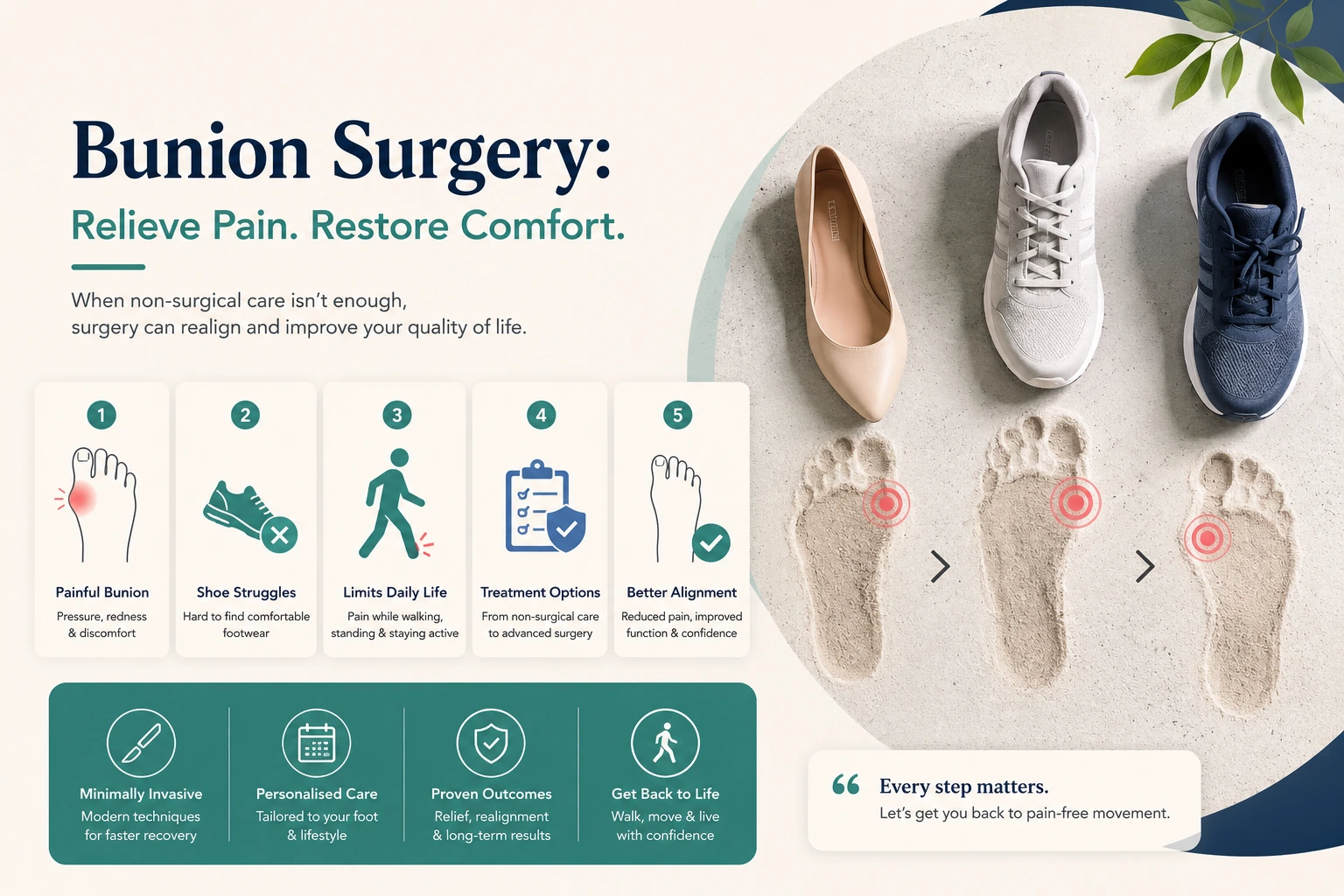

Bunion surgery is usually considered for a painful bunion that makes walking or wearing suitable shoes difficult despite reasonable non-surgical treatment. It is not normally recommended simply to make a painless foot look straighter. The decision is based on symptoms, function, examination and weight-bearing X-rays, not the size of the bump alone.
Wide footwear, padding, toe spacers, orthoses and pain management can reduce pressure and improve comfort, but they do not permanently realign the bones. Surgery can correct alignment, although recovery takes time and recurrence or other complications remain possible.
This article provides general information and does not replace an individual assessment by a qualified health professional.
What is a bunion?
A bunion is the visible prominence at the base of the big toe associated with hallux valgus, where the big toe angles towards the smaller toes and the first metatarsal shifts in the opposite direction. It is a change in foot alignment, not simply an extra piece of bone.
Bunions often run in families because inherited foot shape and joint mobility affect risk. Tight, narrow or high-heeled shoes can increase pressure and symptoms, but footwear is not the only cause. Arthritis, previous injury and ligament laxity may also contribute.
What symptoms can a bunion cause?
- pain or tenderness over the prominence
- redness or skin irritation from footwear
- difficulty finding shoes that fit
- pain while walking or standing
- reduced movement or arthritis in the big-toe joint
- pressure under the ball of the foot
- crowding, crossing or deformity of the smaller toes
- corns, callus or skin breakdown
The angle seen on an X-ray does not always match symptom severity. Some large bunions are manageable, while a smaller deformity can be painful because of footwear pressure or joint arthritis.
When should a bunion be assessed?
See a GP or podiatrist when pain persists, shoes no longer fit comfortably, walking is affected or the skin becomes inflamed. Assessment is particularly important for people with diabetes, reduced circulation or reduced sensation because small skin problems can become more serious.
Seek prompt care for a wound, ulcer, spreading redness, discharge, fever, a cold or discoloured toe, or sudden severe pain. Do not self-treat corns or broken skin with blades or strong acids if diabetes, poor circulation or neuropathy is present.
Can a bunion improve without surgery?
Non-surgical treatment can improve comfort and function, but it usually does not permanently correct the underlying alignment. This can still be a successful outcome: a painless, functional foot does not require surgery simply because the bunion remains visible.
Options may include:
Wider and deeper footwear
Choose shoes with enough width and depth for the toes, a stable sole and a low heel. The upper material should not press directly on the bunion. Shoe fit should be judged while standing because the foot spreads under load.
Padding and toe spacers
Padding can reduce rubbing over the prominence. A spacer may improve comfort between the toes in some people, although it does not permanently straighten the metatarsal.
Orthoses and shoe modification
An orthosis may redistribute pressure and help symptoms related to the way the foot loads. A podiatrist or orthotist can advise whether an off-the-shelf or individual device is appropriate.
Exercise and joint care
Exercise cannot reverse the bony deformity, but maintaining movement and strength can support walking and balance. A physiotherapist or podiatrist can tailor exercises when stiffness or weakness contributes to symptoms.
Pain management
Ask a doctor or pharmacist whether a pain medicine is suitable. Injections may occasionally be used when an inflamed joint or bursa contributes, but they do not correct alignment.
When is bunion surgery considered?
The 2025 hallux valgus guideline describes the usual indication as symptomatic hallux valgus after unsuccessful conservative treatment. An Australian general-practice review similarly recommends orthopaedic referral for a painful prominence after non-operative options have been exhausted or when skin breakdown is developing.
A surgical opinion may be reasonable when:
- pain persists despite suitable wide footwear and pressure relief
- walking, work or normal activity remains limited
- finding safe footwear has become difficult
- the big toe pushes other toes into painful deformity
- skin breakdown or ulcer risk is developing
- big-toe joint arthritis or instability changes the treatment options
- the person understands the recovery and accepts the material risks
Surgery is usually not indicated for a painless bunion or purely cosmetic concern. The operation itself causes pain and swelling during recovery and can create new problems even when alignment improves.
What X-rays are needed?
Weight-bearing foot X-rays are commonly used because they show alignment while standing. The surgeon measures the relationship between the big toe, first metatarsal and neighbouring bones and checks for arthritis or deformity elsewhere in the foot.
The X-ray helps select a procedure, but the operation should still be justified by symptoms and functional limits. Treating the image without a meaningful patient problem is not appropriate.
What does bunion surgery involve?
There is no single bunion operation. Procedure choice depends on deformity severity, joint arthritis, instability, bone shape, age, activity and surgeon assessment. Surgery may involve:
- osteotomy, cutting and realigning one or more bones
- soft-tissue balancing, releasing tight structures and tightening stretched ones
- arthrodesis, fusing a painful or unstable joint
- additional toe correction when smaller-toe deformity also needs treatment
Simply shaving off the bump without correcting the underlying alignment may be inadequate for many bunions. Ask which bones and joints will be treated and why that procedure suits your foot.
Open versus minimally invasive bunion surgery
Both open and minimally invasive techniques can realign the foot. Smaller skin incisions do not mean there is no bone surgery or that recovery is immediate. In either approach, bone may be cut, shifted and fixed with screws.
The best approach depends on deformity, surgeon training and the specific procedure. Ask about evidence, expected correction, recurrence, fixation, radiation use, wound considerations and the surgeon's experience with the proposed technique rather than choosing by incision size alone.
What are the risks of bunion surgery?
Potential complications include:
- infection or wound-healing problems
- delayed bone healing or nonunion
- nerve irritation or numbness
- stiffness of the big-toe joint
- persistent pain or pain under another part of the foot
- under-correction, over-correction or recurrence
- blood clot and anaesthetic complications
- need for hardware removal or another operation
Smoking and nicotine can interfere with bone and wound healing. Diabetes, circulation, weight, medicines and other health conditions also affect risk. The surgeon and anaesthetic team should explain how these factors apply to you.
How long is bunion surgery recovery?
Recovery varies by procedure. Many patients go home the same day or the following day. Elevation is important early because swelling can be substantial. A surgical shoe, boot or cast may be required, and the permitted amount of weight-bearing depends on the bone work and fixation.
Healthdirect notes that it may take six weeks or longer before swelling allows a normal soft shoe, while residual swelling can persist for months. Driving, physical work and sport often take longer than the initial wound healing.
Before surgery, arrange help, transport and suitable footwear and clarify:
- whether weight-bearing is allowed
- how long the special shoe or boot is required
- when the wound can get wet
- when driving may resume safely and legally
- how work duties will be modified
- which exercises and follow-up X-rays are planned
What does the evidence say about surgery?
A 2024 Cochrane review found that surgery may produce a clinically important reduction in pain compared with no treatment or non-surgical care and may slightly improve function and perceived treatment success. The review also found uncertainty around reoperation and adverse-event differences because the available trials were limited.
This supports a balanced decision. Surgery can help selected people with painful, limiting bunions, but the evidence does not justify operating on every deformity or promising a perfect result.
How do you choose a foot and ankle surgeon?
Look for a surgeon whose stated practice includes forefoot and hallux valgus surgery. Compare foot and ankle surgeons in Perth by clinical focus, qualifications, locations and hospital affiliations.
Verify current registration through the AHPRA register. Ask the practice whether weight-bearing X-rays are needed and whether the surgeon uses the specific open or minimally invasive procedure being discussed.
A valid referral is generally needed to claim the relevant Medicare specialist benefit. Read the Australian orthopaedic referral guide.
Questions to ask before bunion surgery
- Which part of the foot is causing my pain?
- Which non-surgical options remain?
- Why is this operation appropriate for my deformity?
- Will bone be cut or a joint fused?
- What are the recurrence and reoperation risks?
- How long will weight-bearing and footwear be restricted?
- When can I drive, work and exercise?
- How do my health conditions affect healing?
Frequently asked questions
Can bunion correctors straighten the foot permanently?
Padding, spacers and splints may improve comfort, but they do not usually produce permanent correction of adult bone alignment. Their value is symptom relief.
Should a painless bunion be operated on?
Usually not. Surgery is generally considered for pain and functional problems after non-surgical measures, not to prevent every possible future change or for appearance alone.
Can a bunion return after surgery?
Yes. Recurrence is a recognised risk. The likelihood depends on the deformity, procedure, alignment, healing and other patient factors.
When does a bunion need urgent care?
A routine bunion is not an emergency. Seek prompt care for ulceration, spreading redness, discharge, fever, severe sudden pain or circulation changes, especially when diabetes or reduced sensation is present.